


Get On The List
Get the latest Men's Style Advice, Evergreen Guides, Shopping Tips, and Exclusive Deals From Today's Top Brands.
 06 May 2016
 Luke Todd
We independently evaluate all recommended products and services. Any products or services put forward appear in no particular order. if you click on links we provide, we may receive compensation.
From the armed forces to the art world, almost every trade throws around its own lingo. Whether a technical term or a common phrase, these exotic ways of communication baffle and bemuse any inexperienced ear they fall on.
Ever wondered what trucker talk like “bear in the air” translates into? Or what a builder’s up to while he’s “making good”? Don’t worry, so has everyone else not in on their argot (that’s ‘secret language’ to most.)
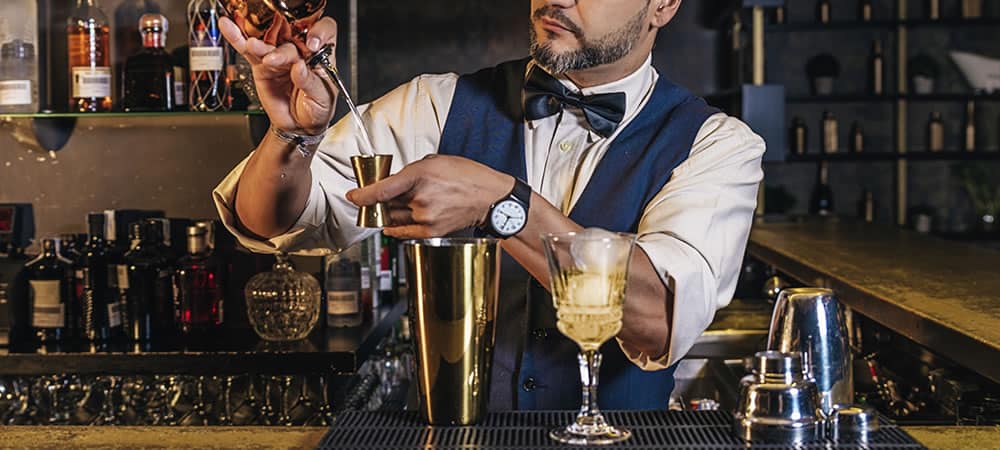
The habit even extends to the world of alcohol; the boozy realm of cocktails can leave your head spinning in more than one way. So, with that in mind, here is a few basic bar terms to learn so you can order a slice and ice with ease.
These words indicate at which point in the evening a drink should be consumed. An apéritif is designed to be had prior to eating a meal to stimulate hunger. As a result, these are usually dry rather than sweet, think gin or vermouth.
Perhaps slightly more obvious, a digestif should be ordered after eating to help with digestion. Typically these are sweeter drinks such as brandy or port.
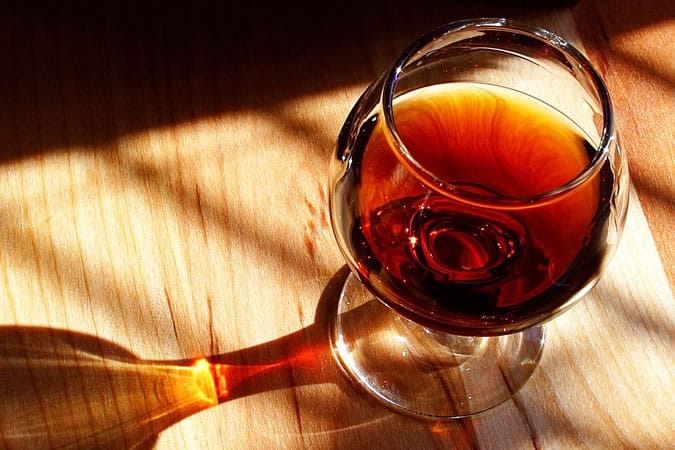
One of the most common terms, this signals to the bartender that you want your drink, usually a liquor, served in a lowball glass over cubes of ice.
Whether you enjoy your drink on the rocks or neat (read on) is a matter of personal preference, but some distilleries make their own suggestions so don’t be afraid to ask the bartender for advice.

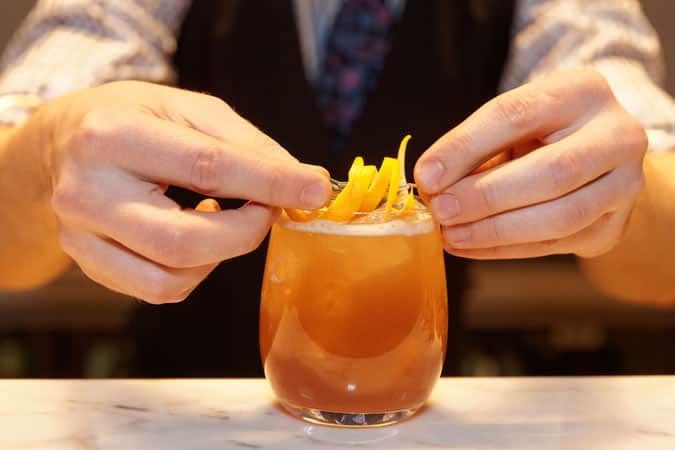
Many think added fruit in drinks is purely for decoration, but this touch can also serve an important purpose in adding flavour. Citrus peeled using a special tool known as a canelle cutter and placed in the drink or hung on the side is referred to as ‘with a twist’.
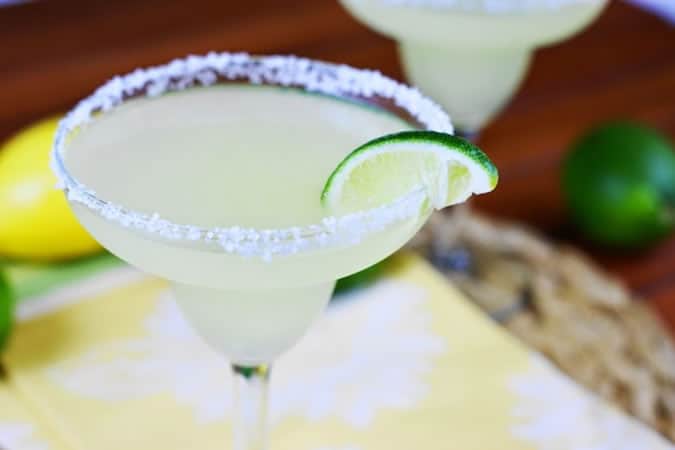
Somewhere between on the rocks and neat, a drink served straight up – along the lines of a margarita – is shaken or stirred with ice to chill it and then the ice strained out. The idea behind this is that once cooled and in the glass, the ice doesn’t melt, diluting the drink or the flavour.
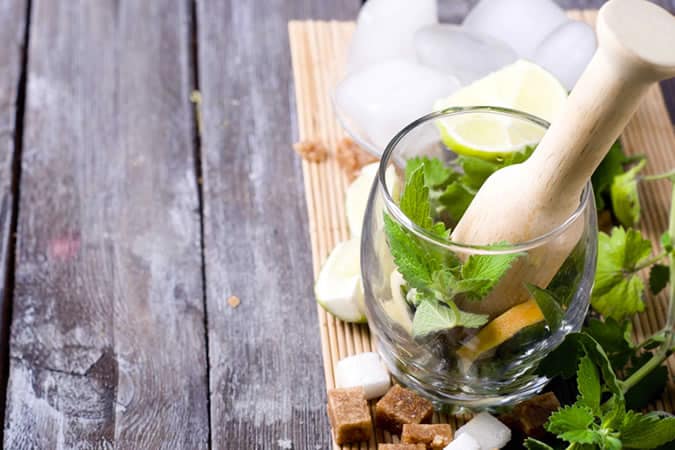
If you see a bartender reaching for a pestle-looking tool then he’s getting ready to muddle. This is used to make drinks that require mashed fruit or herbs like mojitos and caipiroskas.
The aim is to extract juice from fruit or release essential oils from herbs.
No ice, no water, no mixer, that’s what you’ll get if you order neat. Many believe certain types of brandy or scotch are best served at room temperature and therefore are often asked for neat. Anything served this way is meant to be sipped, not shot like in the movies.

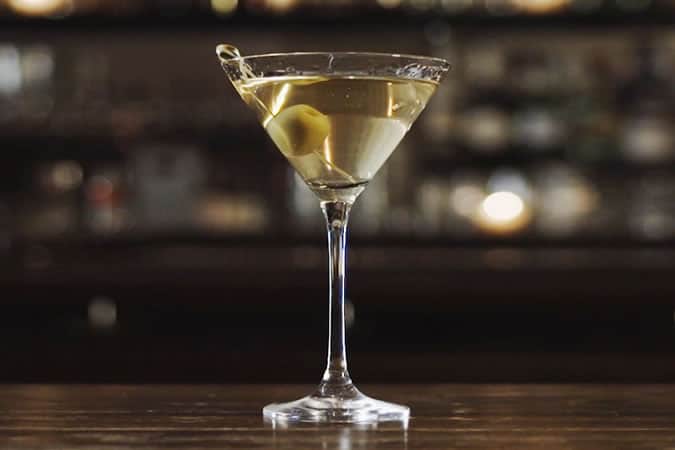
To drink dirty doesn’t mean the dishwasher is on the blink. Most common when ordering a martini, juice from the bar olives is added, clouding the colour and giving the drink a salty, briny taste.
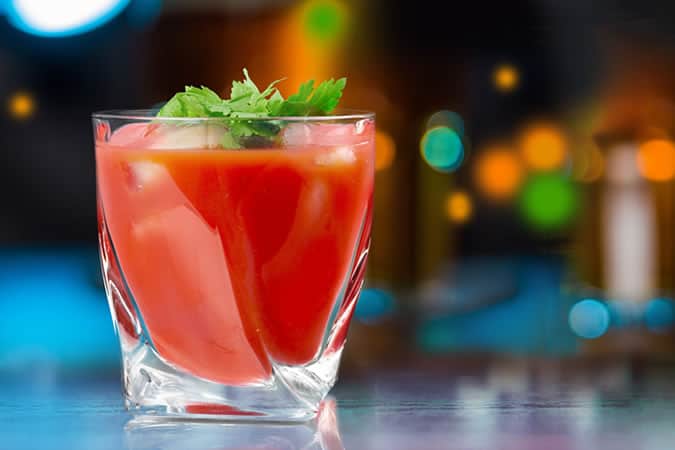
Designated driver? Best ask for your drink virgin (mainly because it sounds more adult than a ‘mocktail’). This is a non-alcoholic drink and most common cocktails can be made minus the spirits, such as a bramble. Just never order a virgin Cuba Libre.
As FashionBeans deputy editor, Luke Todd is tasked with filtering through the latest from the worlds of fashion, grooming, fitness, technology and lifestyle to deliver an indispensable edit of the most stylish stuff. Along with working on the site since 2009, he has written for leading titles such as ShortList, Drapers and GQ Style Germany and has consulted for brands including Bulldog Skincare and James Harknett.
 06 May 2016
 Luke Todd
We independently evaluate all recommended products and services. Any products or services put forward appear in no particular order. if you click on links we provide, we may receive compensation.
From the armed forces to the art world, almost every trade throws around its own lingo. Whether a technical term or a common phrase, these exotic ways of communication baffle and bemuse any inexperienced ear they fall on.
Ever wondered what trucker talk like “bear in the air” translates into? Or what a builder’s up to while he’s “making good”? Don’t worry, so has everyone else not in on their argot (that’s ‘secret language’ to most.)
The habit even extends to the world of alcohol; the boozy realm of cocktails can leave your head spinning in more than one way. So, with that in mind, here is a few basic bar terms to learn so you can order a slice and ice with ease.
These words indicate at which point in the evening a drink should be consumed. An apéritif is designed to be had prior to eating a meal to stimulate hunger. As a result, these are usually dry rather than sweet, think gin or vermouth.
Perhaps slightly more obvious, a digestif should be ordered after eating to help with digestion. Typically these are sweeter drinks such as brandy or port.
One of the most common terms, this signals to the bartender that you want your drink, usually a liquor, served in a lowball glass over cubes of ice.
Whether you enjoy your drink on the rocks or neat (read on) is a matter of personal preference, but some distilleries make their own suggestions so don’t be afraid to ask the bartender for advice.
Many think added fruit in drinks is purely for decoration, but this touch can also serve an important purpose in adding flavour. Citrus peeled using a special tool known as a canelle cutter and placed in the drink or hung on the side is referred to as ‘with a twist’.
Somewhere between on the rocks and neat, a drink served straight up – along the lines of a margarita – is shaken or stirred with ice to chill it and then the ice strained out. The idea behind this is that once cooled and in the glass, the ice doesn’t melt, diluting the drink or the flavour.
If you see a bartender reaching for a pestle-looking tool then he’s getting ready to muddle. This is used to make drinks that require mashed fruit or herbs like mojitos and caipiroskas.
The aim is to extract juice from fruit or release essential oils from herbs.
No ice, no water, no mixer, that’s what you’ll get if you order neat. Many believe certain types of brandy or scotch are best served at room temperature and therefore are often asked for neat. Anything served this way is meant to be sipped, not shot like in the movies.
To drink dirty doesn’t mean the dishwasher is on the blink. Most common when ordering a martini, juice from the bar olives is added, clouding the colour and giving the drink a salty, briny taste.
Designated driver? Best ask for your drink virgin (mainly because it sounds more adult than a ‘mocktail’). This is a non-alcoholic drink and most common cocktails can be made minus the spirits, such as a bramble. Just never order a virgin Cuba Libre.
As FashionBeans deputy editor, Luke Todd is tasked with filtering through the latest from the worlds of fashion, grooming, fitness, technology and lifestyle to deliver an indispensable edit of the most stylish stuff. Along with working on the site since 2009, he has written for leading titles such as ShortList, Drapers and GQ Style Germany and has consulted for brands including Bulldog Skincare and James Harknett.



Get the latest Men's Style Advice, Evergreen Guides, Shopping Tips, and Exclusive Deals From Today's Top Brands.
We respect your privacy. We won't spam you.
Get the latest Men's Style Advice, Evergreen Guides, Shopping Tips, and Exclusive Deals From Today's Top Brands.
We respect your privacy. We won't spam you.
