


Get On The List
Get the latest Men's Style Advice, Evergreen Guides, Shopping Tips, and Exclusive Deals From Today's Top Brands.
 09 December 2024
 Richard Jones
We independently evaluate all recommended products and services. Any products or services put forward appear in no particular order. if you click on links we provide, we may receive compensation.
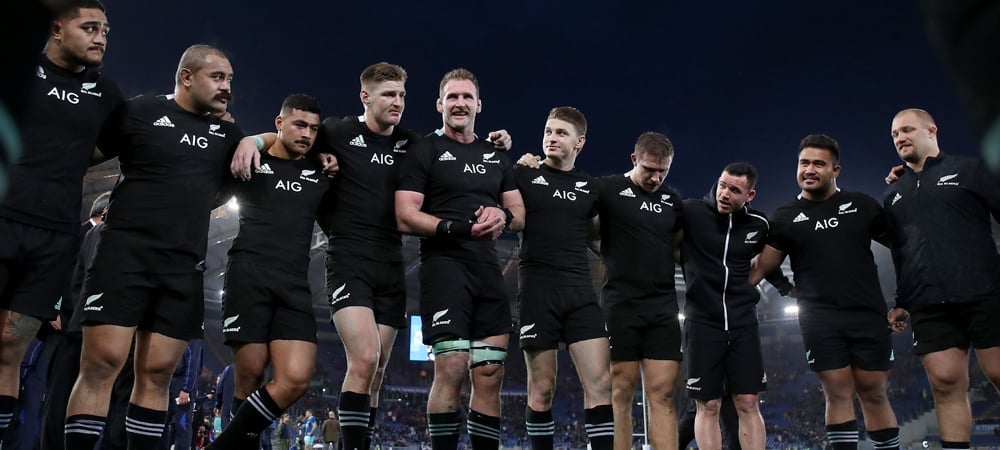
They’re a team with an 87 per cent record and have a win against every side they’ve ever come across – the only international men’s team across all sports to have one. Sometimes you wonder if the New Zealand rugby team, better known as the All Blacks even know how to lose. Famed for their pre-match war cry known as the haka, they romped to victory in the past two Rugby World Cups, and while they might not have gone into the 2019 Rugby World Cup ranked number one, you wouldn’t bet against them making it a third. As part of the side’s partnership with luxury watchmaker Tudor, FashionBeans joined four of the team’s current players – second row Scott Barrett, flanker Dalton Papalii, fly-half Richie Mo’unga and two-time rugby world player of the year Beauden Barrett – for a training session to figure how to think, train and win like the legendary side.
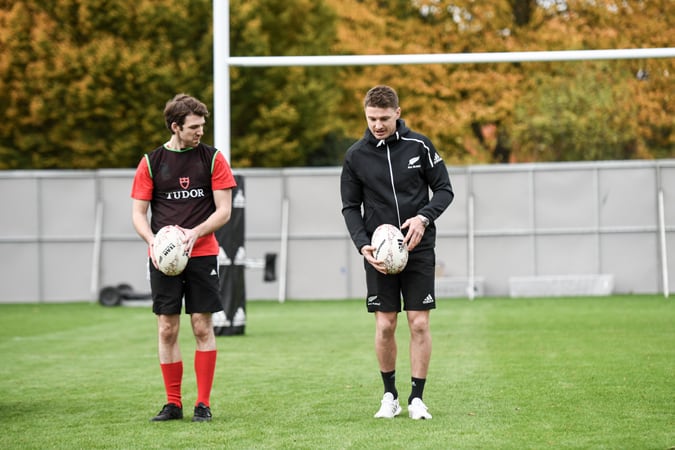
The four players perfectly embody the much-talked-about mindset of the All Blacks, which is partly what makes them so successful. One of the number one rules within the team is ‘no dickheads allowed’, as implemented by the team’s mental skills coach Gilbert Enoka. The idea is that to make the team, the individual egos of each player needs to be removed. “A dickhead makes everything about them,” he told Gameplan A magazine. “They are people who put themselves ahead of the team…often teams put up with it because a player has so much talent. “We look for early warning signs and wean the big egos out pretty quickly. Our motto is, ‘if you can’t change the people, change the people’. The management might not spot these counterproductive behaviours. The players and leaders themselves should call others out for their inflated egos.”

Another well-reported mental technique used by the side is ‘Red to Blue’. In the concept, a ‘red head’ is the feeling of being tight and anxious, whereas blue is associated with calm, clear and accurate thinking. During points in a match, a player’s attention will often get diverted and he may descend into red thinking. The players are taught to recognise these moments before enacting a cue for concentration to move them to the blue. Former All Blacks captain Richie McCaw would stamp his feet as his cue, while you can spot the current skipper, Kieran Read, looking around the stadium.
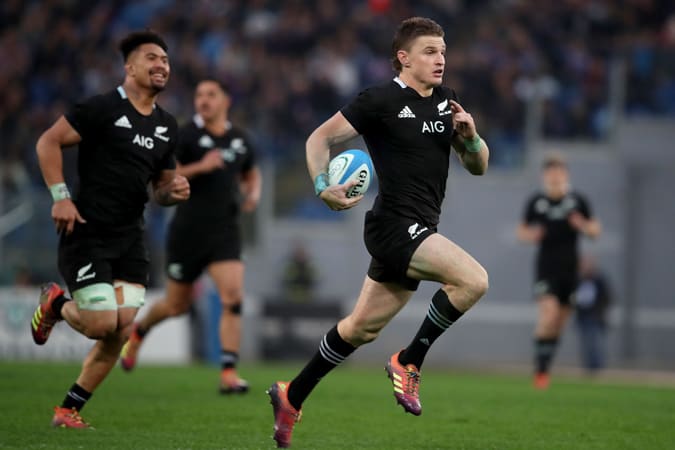
On the field, not all rugby players are created equal. The training and nutritional regimes for a fly-half will be different than a prop providing grunt in the pack. “All Blacks range in size from 78kg to 130kg and 170cm to 205cm, so the caloric intake of each player is very different,” says Nicholas Gill, strength and conditioning coach for the New Zealand rugby team. “Their roles on the field are very different with some running up to 10km in a game, and some needing to be able to squat 250kg. “Essentially, each player fuels their body for performance each day, and due to the nature of the sport and the collisions that occur, recovery nutrition is also very important.”
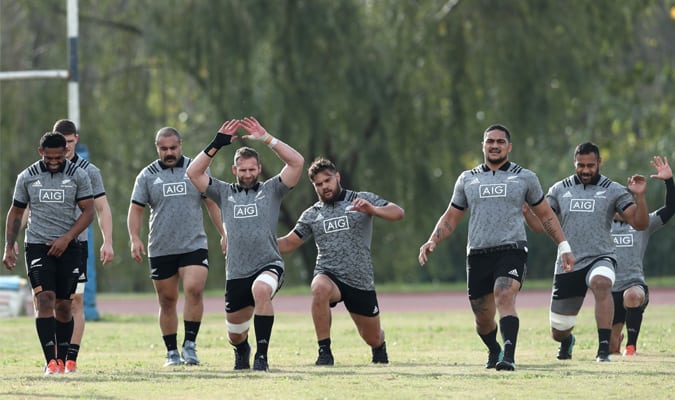
Taking this into account, we asked Gill for two general workouts that he would do with the team. Just like the All Blacks players, you may want to adjust the regimes depending on your goals. But one thing’s for certain, if you want to mix it with the world-beaters, you’re going to feel it in the morning.
Designed for strength and injury prevention when playing, much of this workout revolves around three supersets that will push every part of your body to the limit.
You’ll want to be moving between exercises as quickly as you can here – no rest until the end. Do three to four of these supersets in total. After each full round, rest for two to three minutes before jumping back into the next set. Back Squat For the back squat, you want to be doing ‘heavy triples’ – three repetitions at the heaviest weight you can lift.
Sled Push You’ll need a 15m track with the sled as loaded up as heavy as you can push for this. It’s tricky to judge at first, but you’ll know if you’ve loaded the sled up too much.
Box Jump
Complete three to four sets with two to three minutes rest at the end of each complete round. Bench Press For this bench press, you’re going to go down one repetition with each set, starting at six and ending up at three.
Neck Bridge, Front and Back
Nordic Hamstring Drop
Complete three to four sets with two to three minutes rest at the end of each complete round. Weighted Chin-Up Use a belt which you can attach a strong chain onto and then thread weight plates through. If you have a thick link chain, you can just rope it around your waist. The shorter the chain, the better, as it stops the plates swinging around.
Dumbbell Shoulder Press For this exercise, do eight repetitions for one set. Pick up your dumbbells from a standing position. Don’t go overboard on the weight here (you almost want to feel like you’ve picked too light), this is an exercise that suddenly feels very tough halfway through a set.
Bent-Over Fly For this exercise, do eight repetitions for one set.
This second workout is designed to enhance a player’s power and speed. The amount of repetitions are low so that you can concentrate on lifting heavier weights and ultimately building more mass as a result.
This is one rep. Complete three repetitions, four times. As soon as you have completed three reps for a set, move straight into a 5m accelerated sprint off of a standing start.
Bench Press Follow the instructions from the second superset. Do three repetitions for one set over four. Assisted Chin-Up Use an assisted pull-up machine or attach a heavy-duty band to a pull-up station, putting it around just one knee. The tension should be taut enough to pull that lower leg up. You might be strong enough to do this movement without the need for assistance, but the machine will help ensure you keep your form and all while preventing the risk of injury.
Jump Squat The jump squat is exactly the same as the back squat from before, but at the end of the movement you want to engage your core and jump up explosively.
Box Jumps Combining the box jump from earlier with a jump squat will help build your practical strength and speed. This is a great idea if you’re looking to improve your performance outside the gym, such as on the sports field.
Heavy Quarter Squats A variation on the traditional back squat, the quarter squat serves as a good segue for those who have only done bodyweight squats before, into a full-on weighted squat. Skipping Skipping is great for helping improve your co-ordination and footwork, while really working your core hard as your abs will need to tense to stabilise yourself as you jump. Plank A stable core is essential for endurance, speed and preventing injury during a fast-paced rugby game. As well as strengthening key muscles, the benefit of a plank is that you can do it just about anywhere. To find out more about the partnership between the All Blacks and Tudor watches, click here

 09 December 2024
 Richard Jones
We independently evaluate all recommended products and services. Any products or services put forward appear in no particular order. if you click on links we provide, we may receive compensation.
They’re a team with an 87 per cent record and have a win against every side they’ve ever come across – the only international men’s team across all sports to have one. Sometimes you wonder if the New Zealand rugby team, better known as the All Blacks even know how to lose. Famed for their pre-match war cry known as the haka, they romped to victory in the past two Rugby World Cups, and while they might not have gone into the 2019 Rugby World Cup ranked number one, you wouldn’t bet against them making it a third. As part of the side’s partnership with luxury watchmaker Tudor, FashionBeans joined four of the team’s current players – second row Scott Barrett, flanker Dalton Papalii, fly-half Richie Mo’unga and two-time rugby world player of the year Beauden Barrett – for a training session to figure how to think, train and win like the legendary side.
The four players perfectly embody the much-talked-about mindset of the All Blacks, which is partly what makes them so successful. One of the number one rules within the team is ‘no dickheads allowed’, as implemented by the team’s mental skills coach Gilbert Enoka. The idea is that to make the team, the individual egos of each player needs to be removed. “A dickhead makes everything about them,” he told Gameplan A magazine. “They are people who put themselves ahead of the team…often teams put up with it because a player has so much talent. “We look for early warning signs and wean the big egos out pretty quickly. Our motto is, ‘if you can’t change the people, change the people’. The management might not spot these counterproductive behaviours. The players and leaders themselves should call others out for their inflated egos.”
Another well-reported mental technique used by the side is ‘Red to Blue’. In the concept, a ‘red head’ is the feeling of being tight and anxious, whereas blue is associated with calm, clear and accurate thinking. During points in a match, a player’s attention will often get diverted and he may descend into red thinking. The players are taught to recognise these moments before enacting a cue for concentration to move them to the blue. Former All Blacks captain Richie McCaw would stamp his feet as his cue, while you can spot the current skipper, Kieran Read, looking around the stadium.
On the field, not all rugby players are created equal. The training and nutritional regimes for a fly-half will be different than a prop providing grunt in the pack. “All Blacks range in size from 78kg to 130kg and 170cm to 205cm, so the caloric intake of each player is very different,” says Nicholas Gill, strength and conditioning coach for the New Zealand rugby team. “Their roles on the field are very different with some running up to 10km in a game, and some needing to be able to squat 250kg. “Essentially, each player fuels their body for performance each day, and due to the nature of the sport and the collisions that occur, recovery nutrition is also very important.”
Taking this into account, we asked Gill for two general workouts that he would do with the team. Just like the All Blacks players, you may want to adjust the regimes depending on your goals. But one thing’s for certain, if you want to mix it with the world-beaters, you’re going to feel it in the morning.
Designed for strength and injury prevention when playing, much of this workout revolves around three supersets that will push every part of your body to the limit.
You’ll want to be moving between exercises as quickly as you can here – no rest until the end. Do three to four of these supersets in total. After each full round, rest for two to three minutes before jumping back into the next set. Back Squat For the back squat, you want to be doing ‘heavy triples’ – three repetitions at the heaviest weight you can lift.
Sled Push You’ll need a 15m track with the sled as loaded up as heavy as you can push for this. It’s tricky to judge at first, but you’ll know if you’ve loaded the sled up too much.
Box Jump
Complete three to four sets with two to three minutes rest at the end of each complete round. Bench Press For this bench press, you’re going to go down one repetition with each set, starting at six and ending up at three.
Neck Bridge, Front and Back
Nordic Hamstring Drop
Complete three to four sets with two to three minutes rest at the end of each complete round. Weighted Chin-Up Use a belt which you can attach a strong chain onto and then thread weight plates through. If you have a thick link chain, you can just rope it around your waist. The shorter the chain, the better, as it stops the plates swinging around.
Dumbbell Shoulder Press For this exercise, do eight repetitions for one set. Pick up your dumbbells from a standing position. Don’t go overboard on the weight here (you almost want to feel like you’ve picked too light), this is an exercise that suddenly feels very tough halfway through a set.
Bent-Over Fly For this exercise, do eight repetitions for one set.
This second workout is designed to enhance a player’s power and speed. The amount of repetitions are low so that you can concentrate on lifting heavier weights and ultimately building more mass as a result.
This is one rep. Complete three repetitions, four times. As soon as you have completed three reps for a set, move straight into a 5m accelerated sprint off of a standing start.
Bench Press Follow the instructions from the second superset. Do three repetitions for one set over four. Assisted Chin-Up Use an assisted pull-up machine or attach a heavy-duty band to a pull-up station, putting it around just one knee. The tension should be taut enough to pull that lower leg up. You might be strong enough to do this movement without the need for assistance, but the machine will help ensure you keep your form and all while preventing the risk of injury.
Jump Squat The jump squat is exactly the same as the back squat from before, but at the end of the movement you want to engage your core and jump up explosively.
Box Jumps Combining the box jump from earlier with a jump squat will help build your practical strength and speed. This is a great idea if you’re looking to improve your performance outside the gym, such as on the sports field.
Heavy Quarter Squats A variation on the traditional back squat, the quarter squat serves as a good segue for those who have only done bodyweight squats before, into a full-on weighted squat. Skipping Skipping is great for helping improve your co-ordination and footwork, while really working your core hard as your abs will need to tense to stabilise yourself as you jump. Plank A stable core is essential for endurance, speed and preventing injury during a fast-paced rugby game. As well as strengthening key muscles, the benefit of a plank is that you can do it just about anywhere. To find out more about the partnership between the All Blacks and Tudor watches, click here


Get the latest Men's Style Advice, Evergreen Guides, Shopping Tips, and Exclusive Deals From Today's Top Brands.
We respect your privacy. We won't spam you.
Get the latest Men's Style Advice, Evergreen Guides, Shopping Tips, and Exclusive Deals From Today's Top Brands.
We respect your privacy. We won't spam you.
