


Get On The List
Get the latest Men's Style Advice, Evergreen Guides, Shopping Tips, and Exclusive Deals From Today's Top Brands.
 12 July 2024
 FashionBeans Editors
We independently evaluate all recommended products and services. Any products or services put forward appear in no particular order. if you click on links we provide, we may receive compensation.
Even that three-piece Tom Ford suit isn’t going to be enough to make you look good when you’re lying face down in a pile of your own teeth, surrounded by startled party guests, with your shoes a few yards behind you.
While it may be an unpleasant one, that mental image should illustrate to you the importance of ensuring your smart footwear is laced up correctly.
We know, tying your shoes isn’t exactly rocket science. After all, the likelihood is you’ve been able to do it since before you could even spell shoelaces. However, not all footwear was created equal and different smart shoes require varying lacing methods.
Curious? Well, you can’t be blamed for that.
It may sound obvious, but every weekend thousands of men are left scratching their heads after being turned away from nightclubs for wearing their Nike Air Max. This suggests that there is still some confusion about what the term ‘smart shoes’ actually means. So, let’s revisit the basics for their sake.
Being as broad as possible, if you’d wear it to the office with a suit, chances are you can consider it a smart shoe. We’re talking leather, black or brown, no excessive detailing and certainly no big logos.
When it comes to lacing your smart shoes, you’ll need to understand the subtle difference between what are referred to as closed-lace and open-lace styles.
In closed-lace styles, the part of the shoe that covers the front portion and sides of the foot, known as the ‘vamp’, is stitched over the bottom of the part of the shoe that contains the eyelets, known as the ‘facing’. This results in a cleaner overall look but at the cost of flexibility. In general, closed-lace styles tend to be much more formal due to their uncluttered appearance.
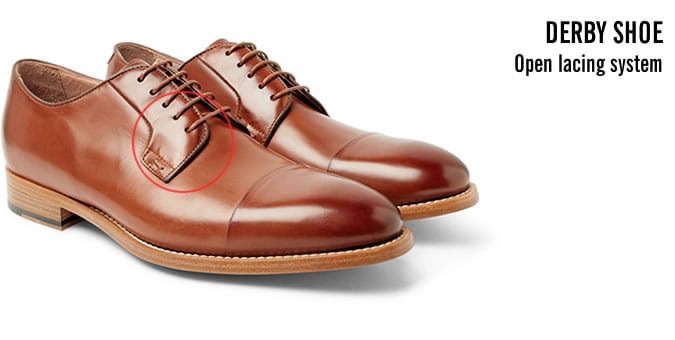
Open-lace styles differ in that the facing is stitched on top of the vamp. This offers more room for adjustment and makes shoes more flexible, but it’s not seen as ‘dress shoe’ styling owing to the busy look this creates on the upper.
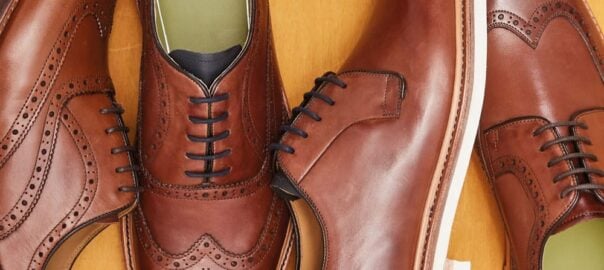
Weirdly enough, Oxford shoes first appeared in Scotland and Ireland. They feature a closed lacing system and have become the definitive dress shoe and the only real choice when it comes to black-tie dress codes.
However, the Oxford isn’t exclusively a dress shoe. Added detailing such as wingtip panels and perforated patterning known as ‘broguing’ can help to make the style look a little more laid back.
Because of this, the Oxford is the only shoe that can function with everything from a tuxedo to a pair of jeans and a T-shirt.
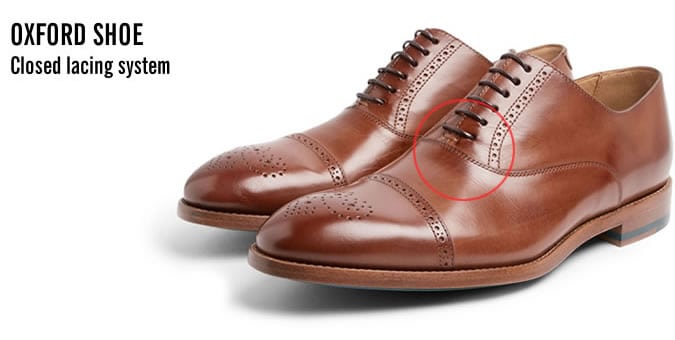
The Derby shoe is a businessman’s best friend. The trusty stomper that’s comfortable enough to be worn every day, yet smart enough to do a suit justice. It may not be as dressy as an Oxford, but hey, it never claimed to be and what it does do, it does well.
Unlike its Oxford cousin, the Derby features an open lacing system. The facing on a pair of Derbies is always open at both the top and the bottom, which is the reason for their trademark comfort.
For an everyday business casual shoe that can hold its own in the boardroom, a Derby is what you need.
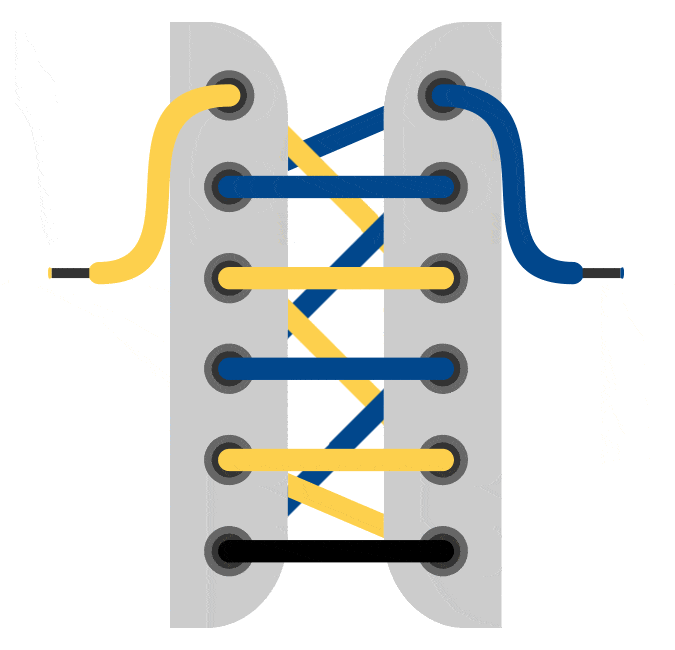
Due to their closed lacing system, Oxfords have to be laced up in a certain way. If you’re replacing the laces in your shoes, measure your old ones to ensure you get the best possible fit. Then it’s a case of finding something thin and round that matches the colour of your shoes perfectly. There’s no room for colourful statements here.
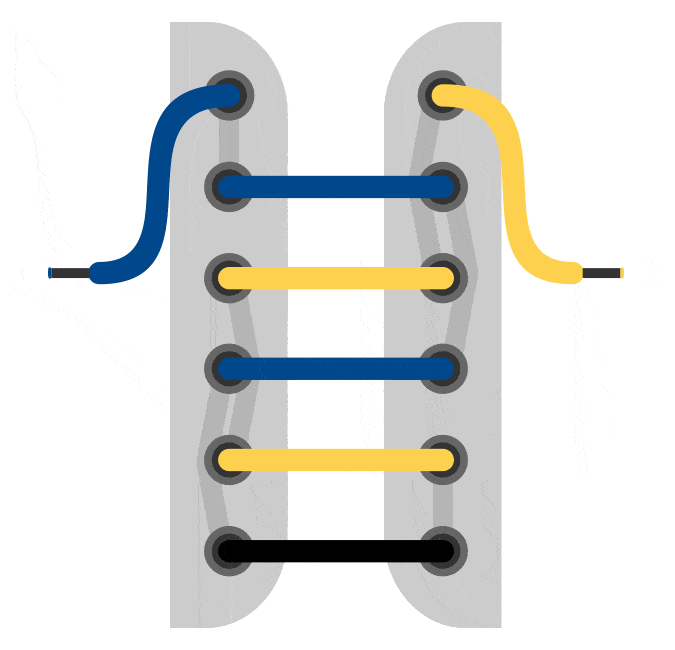
Once you have the right laces at your disposal, you’ll want to use one of two methods: either European straight lacing or ladder lacing. Both of these methods will leave you with neat horizontal lines running from eyelet to eyelet, while the lacing hidden underneath will allow you to tighten things up.
“Ladder lacing, or show lacing as it sometimes called, is only really practical on shoes with less than four eyelets,” explains Oliver Sweeney’s cobbler-in-chief Tim Cooper. “This is as it doesn’t pull evenly and over time will pull the shoe out of shape.” European straight lacing is more versatile, so if your pair has more than four eyelets, go for this method.
The process for lacing a pair of Derby shoes is much the same as the process for lacing a pair of Oxfords. First, you’ll need to find laces that are the correct length, colour and shape to fit your shoes, then it’s a case of fixing them in place.
Again, these are smart shoes so the method of lacing should be neat. However, the difference here is the open lacing system which means the tongue of the shoe tends to be partly visible. This rules out any type of lacing that uses diagonal lines to tighten the shoe, so the best option is to use straight bar lacing, which snakes in an ‘S’ shape from eyelet to eyelet, leaving straight lines with everything else hidden beneath the facing.

 12 July 2024
 FashionBeans Editors
We independently evaluate all recommended products and services. Any products or services put forward appear in no particular order. if you click on links we provide, we may receive compensation.
Even that three-piece Tom Ford suit isn’t going to be enough to make you look good when you’re lying face down in a pile of your own teeth, surrounded by startled party guests, with your shoes a few yards behind you.
While it may be an unpleasant one, that mental image should illustrate to you the importance of ensuring your smart footwear is laced up correctly.
We know, tying your shoes isn’t exactly rocket science. After all, the likelihood is you’ve been able to do it since before you could even spell shoelaces. However, not all footwear was created equal and different smart shoes require varying lacing methods.
Curious? Well, you can’t be blamed for that.
It may sound obvious, but every weekend thousands of men are left scratching their heads after being turned away from nightclubs for wearing their Nike Air Max. This suggests that there is still some confusion about what the term ‘smart shoes’ actually means. So, let’s revisit the basics for their sake.
Being as broad as possible, if you’d wear it to the office with a suit, chances are you can consider it a smart shoe. We’re talking leather, black or brown, no excessive detailing and certainly no big logos.
When it comes to lacing your smart shoes, you’ll need to understand the subtle difference between what are referred to as closed-lace and open-lace styles.
In closed-lace styles, the part of the shoe that covers the front portion and sides of the foot, known as the ‘vamp’, is stitched over the bottom of the part of the shoe that contains the eyelets, known as the ‘facing’. This results in a cleaner overall look but at the cost of flexibility. In general, closed-lace styles tend to be much more formal due to their uncluttered appearance.
Open-lace styles differ in that the facing is stitched on top of the vamp. This offers more room for adjustment and makes shoes more flexible, but it’s not seen as ‘dress shoe’ styling owing to the busy look this creates on the upper.
Weirdly enough, Oxford shoes first appeared in Scotland and Ireland. They feature a closed lacing system and have become the definitive dress shoe and the only real choice when it comes to black-tie dress codes.
However, the Oxford isn’t exclusively a dress shoe. Added detailing such as wingtip panels and perforated patterning known as ‘broguing’ can help to make the style look a little more laid back.
Because of this, the Oxford is the only shoe that can function with everything from a tuxedo to a pair of jeans and a T-shirt.
The Derby shoe is a businessman’s best friend. The trusty stomper that’s comfortable enough to be worn every day, yet smart enough to do a suit justice. It may not be as dressy as an Oxford, but hey, it never claimed to be and what it does do, it does well.
Unlike its Oxford cousin, the Derby features an open lacing system. The facing on a pair of Derbies is always open at both the top and the bottom, which is the reason for their trademark comfort.
For an everyday business casual shoe that can hold its own in the boardroom, a Derby is what you need.
Due to their closed lacing system, Oxfords have to be laced up in a certain way. If you’re replacing the laces in your shoes, measure your old ones to ensure you get the best possible fit. Then it’s a case of finding something thin and round that matches the colour of your shoes perfectly. There’s no room for colourful statements here.
Once you have the right laces at your disposal, you’ll want to use one of two methods: either European straight lacing or ladder lacing. Both of these methods will leave you with neat horizontal lines running from eyelet to eyelet, while the lacing hidden underneath will allow you to tighten things up.
“Ladder lacing, or show lacing as it sometimes called, is only really practical on shoes with less than four eyelets,” explains Oliver Sweeney’s cobbler-in-chief Tim Cooper. “This is as it doesn’t pull evenly and over time will pull the shoe out of shape.” European straight lacing is more versatile, so if your pair has more than four eyelets, go for this method.
The process for lacing a pair of Derby shoes is much the same as the process for lacing a pair of Oxfords. First, you’ll need to find laces that are the correct length, colour and shape to fit your shoes, then it’s a case of fixing them in place.
Again, these are smart shoes so the method of lacing should be neat. However, the difference here is the open lacing system which means the tongue of the shoe tends to be partly visible. This rules out any type of lacing that uses diagonal lines to tighten the shoe, so the best option is to use straight bar lacing, which snakes in an ‘S’ shape from eyelet to eyelet, leaving straight lines with everything else hidden beneath the facing.


Get the latest Men's Style Advice, Evergreen Guides, Shopping Tips, and Exclusive Deals From Today's Top Brands.
We respect your privacy. We won't spam you.
Get the latest Men's Style Advice, Evergreen Guides, Shopping Tips, and Exclusive Deals From Today's Top Brands.
We respect your privacy. We won't spam you.
