
Get On The List
Get the latest Men's Style Advice, Evergreen Guides, Shopping Tips, and Exclusive Deals From Today's Top Brands.
 15 April 2026
 FashionBeans Editors
We independently evaluate all recommended products and services. Any products or services put forward appear in no particular order. if you click on links we provide, we may receive compensation.
It started on incel forums. It went viral on TikTok. Now it’s in every young man’s algorithm. Looksmaxxing is the internet’s most contested self-improvement trend — and it’s time to cut through the noise.
If you’ve spent any time on TikTok, YouTube, or Instagram in the past year, you’ve encountered it — either as advice, satire, or concern. Looksmaxxing: the idea that a man can methodically optimize his physical appearance through a combination of grooming, fitness, diet, style, and — in its more extreme corners — surgery, chemical regimens, and practices that doctors describe, without ambiguity, as self-harm. The term originated on incel message boards in the early 2010s, where it sat alongside a worldview that ranked men on rigid attractiveness hierarchies and told those at the bottom that their lack of ‘quality’ appearance was their doomed destiny.
By 2022, it had migrated to TikTok. By 2025, it was mainstream enough for the BBC, NPR, and others to be writing about it (what feels like) on-the-daily. By 2026, it’s being debated in government, discussed by pediatricians, and dissected by psychologists researching a measurable rise in body dysmorphia among young men.
And yet, underneath the toxic extremes, there’s a kernel of something recognizable: the desire to look better, feel better, and present a more confident version of yourself to the world. That’s not pathological or even menacing. That’s just self-care. The question — and it matters enormously — is where you cross over self-care and into self-harm.
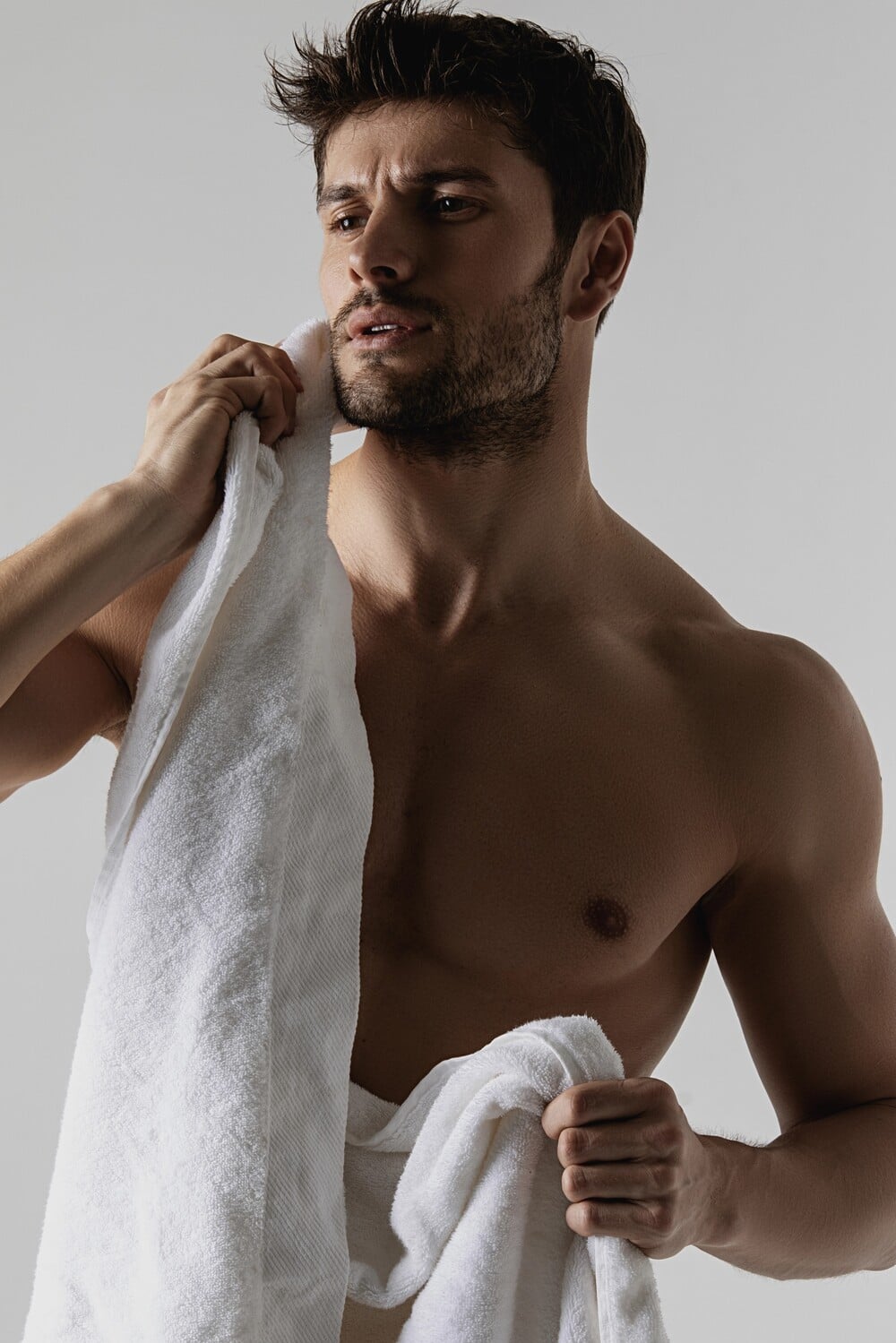
“Softmaxxing” covers the accessible end: skincare routines, better haircuts, improved diet, exercise, well-fitting clothes, better sleep, and grooming habits. This is the version promoted by style-focused creators and, frankly, by men’s magazines for the past 40 years under different vocabulary. There is nothing new or alarming here. A man washing his face twice a day and investing in clothes that actually fit is not a cultural emergency.
“Hardmaxxing” is a different matter entirely. This is where the trend earns its headlines — and its medical warnings.
Hardmaxxing encompasses practices including jaw surgery, limb-lengthening procedures, the use of anabolic steroids, and a practice known as “bonesmashing” — deliberately striking the face to cause microfractures with the intention of restructuring bone.
|
MEDICAL WARNING Practices such as “bonesmashing,” anabolic steroid use for cosmetic purposes, and extreme surgical interventions promoted within hardmaxxing communities carry serious health risks, including permanent disfigurement, hormonal damage, and psychological harm. Multiple medical bodies have warned that these trends are contributing to body dysmorphic disorder in young men — a condition with a significantly elevated risk of severe depression and suicidal ideation. If you or someone you know is struggling with body image, speak to a GP or contact a mental health service. Please see the bottom of the article for more information. |
Medical professionals have been unambiguous: these practices are dangerous, carry serious long-term health risks, and in several documented cases have caused permanent injury. They are not self-improvement. They are self-harm dressed in the language of optimization.
Understanding why looksmaxxing has resonated with young men is more useful than dismissing it. Psychologists point to a cluster of contributing factors: widespread loneliness among young men, economic instability, the algorithmic amplification of “ideal” body and face types, and a cultural moment in which appearance feels like one of the few controllable variables in an uncertain world.
That dynamic deserves genuine empathy, not eye-rolls. The problem is that the more extreme corners of looksmaxxing culture don’t offer control — they offer an ever-receding horizon of adequacy, mediated by content creators who rate followers’ faces on pseudo-scientific scales and classify men into hierarchical tiers. Research published in 2025 found that a significant proportion of looksmaxxing content on TikTok also used “blackpill” hashtags — a set of beliefs rooted in the idea that appearance is destiny and self-improvement is ultimately futile.
That’s the version of looksmaxxing that parents, doctors, and policy-makers are rightly alarmed about. It is not, however, the whole picture.
Stripped of the ideology and the extreme practices, the legitimate advice embedded in softmaxxing culture is solid, evidence-based, and often identical to what any good men’s style and grooming publication would tell you.
Here’s where the real gains are.
| 01
Cleanser, moisturiser with SPF, and exfoliation 2–3 times a week. Clear, hydrated skin has an outsized impact on overall appearance — and the routine costs less than a round of drinks. |
02
Clothes that fit The single biggest upgrade most men can make. Clothes don’t need to be expensive — they need to fit your actual body. A $30 shirt that fits properly beats a $200 one that doesn’t. |
| 03
A haircut that suits your face Not the haircut you’ve had for 10 years out of habit. Book a consultation with a good barber and have an honest conversation about what works for your face shape, hairline, and lifestyle. |
04
Resistance training Building muscle — gradually, naturally, consistently — improves posture, body composition, and confidence. No supplements required beyond adequate protein. Results take months, not weeks. |
| 05
Sleep and hydration Under-eye bags, dull skin, and poor posture are frequently symptoms of chronic under-sleep and dehydration. Eight hours and two litres of water a day won’t trend on TikTok, but they work better than most products. |
06
Posture and grooming basics Standing straight, keeping nails clean, maintaining a neat beard or clean shave, and wearing clothes that aren’t creased. These are free. They are also consistently the things that people actually notice. |
There is nothing wrong with wanting to look better. Fashion, grooming, and fitness have always been about presenting the best version of yourself. FashionBeans exists, in part, because these things matter and because looking good tends to make people feel good. That’s legitimate.
What’s not legitimate — and what the looksmaxxing community at its most extreme actively promotes — is the idea that your value as a person can be reduced to a number between one and eight. The P.S.L. scale, whose acronym traces back to three misogynistic incel forums from the 2010s, does exactly that. It scores men across four dimensions — facial harmony, sexual dimorphism, angularity, and individual features — then sorts the results into a rigid hierarchy running from “subhuman” at the bottom through “normie” to “Chad” at the top. In practice, some versions of the scale classify anyone scoring below five — which is to say, the majority of men alive — as functionally ugly. It is not a self-improvement philosophy. It is a system engineered to make most men feel inadequate, and then sell them something.
The scale’s pseudo-scientific veneer makes it particularly insidious. Serious practitioners analyze up to 46 separate facial measurements — the angle between jaw and neck, the ratio of eyelid height to width — and some content creators charge up to $100 for a personalized rating. Yet for all its numerical precision, the ratings are largely subjective, inconsistent between raters, and contested even within the community itself. What feels like objective data is closer to codified cruelty.
The psychological damage is measurable. Research shows the U.S. is experiencing an unprecedented rise in body dysmorphic disorder among young people, a trend fueled in part by increasingly stringent beauty standards proliferating across social media. Clinicians note that boys as young as 9 or 10 are now seeking help for body image disorders — conditions that were once rarely seen at that age.
BDD carries a 3-fold increased risk of suicide, and crucially, cosmetic surgery does not resolve the underlying condition. The PSL framework is specifically designed so that the goalposts keep moving: looksmaxxers who do make changes frequently find themselves recategorized, reassessed, and still falling short. What’s particularly troubling is how young the audience is — the bulk of active PSL forum participants are well under 20, with boys in early adolescence debating surgical interventions and hormone dosages in public forums.
The vocabulary has gone mainstream faster than its origins are understood. Teenagers now casually describe classmates using PSL terminology, often framed as jokes, while quietly clocking their own supposed flaws in the process. That normalization is precisely how a rating system rooted in incel ideology ends up shaping how a generation of young men see themselves. Recognizing the PSL scale for what it actually is — a commercial and ideological construct, not an objective truth — is the first step out of it.
|
A USEFUL TEST If the motivation behind a change is “I want to feel better” — that’s self-care. If the motivation is “I am not acceptable as I currently am” — that’s worth examining more carefully, ideally with someone qualified to help. Self-improvement and self-punishment can wear the same clothes. |
Looksmaxxing as a cultural moment is worth taking seriously, both the legitimate self-improvement impulse at its core and the dangerous ideological freight that often comes with it. The trend reflects something real about how young men are feeling: under pressure, uncertain, and hungry for some sense of agency over how they’re perceived.
The answer to that isn’t bone-smashing. It’s a good skincare routine, clothes that fit, a haircut that works for your face, and enough sleep. It’s the kind of self-improvement that leaves you feeling more like yourself — not stranded on a never-ending pursuit of a face that isn’t yours.
Do the basics brilliantly.
Leave the rest alone.
|
SUPPORT & RESOURCES If you’re struggling with body image, anxiety about your appearance, or the mental health pressures described in this article, you’re not alone and help is available. In the USA, call or text 988 (Suicide & Crisis Lifeline, free, 24/7). The NAMI HelpLine (nami.org) offers confidential support Monday–Friday, 10 am–10 pm : call 1-800-950-6264 or text “NAMI” to ?62640?. The Anxiety & Depression Association of America (adaa.org) has specific resources on Body Dysmorphic Disorder in men. In the UK, speak to your GP or contact Mind (mind.org.uk) or Samaritans (116 123, free, 24/7). In Ireland, contact Pieta House (1800 247 247) or Aware (1800 804 848). Men’s mental health charity CALM (thecalmzone.net) offers specific support for men. |

The editorial team at FashionBeans is your trusted partner in redefining modern men’s style. Established in 2007, FashionBeans has evolved into a leading authority in men’s fashion, with millions of readers seeking practical advice, expert insights, and real-world inspiration for curating their wardrobe and lifestyle.
Our editorial team combines over 50 years of collective experience in fashion journalism, styling, and retail. Each editor brings specialized expertise—from luxury fashion and sustainable style to the latest grooming technology and fragrance science. With backgrounds ranging from GQ and Esquire to personal styling for celebrities, our team ensures every recommendation comes from a place of deep industry knowledge.
 15 April 2026
 FashionBeans Editors
We independently evaluate all recommended products and services. Any products or services put forward appear in no particular order. if you click on links we provide, we may receive compensation.
It started on incel forums. It went viral on TikTok. Now it’s in every young man’s algorithm. Looksmaxxing is the internet’s most contested self-improvement trend — and it’s time to cut through the noise.
If you’ve spent any time on TikTok, YouTube, or Instagram in the past year, you’ve encountered it — either as advice, satire, or concern. Looksmaxxing: the idea that a man can methodically optimize his physical appearance through a combination of grooming, fitness, diet, style, and — in its more extreme corners — surgery, chemical regimens, and practices that doctors describe, without ambiguity, as self-harm. The term originated on incel message boards in the early 2010s, where it sat alongside a worldview that ranked men on rigid attractiveness hierarchies and told those at the bottom that their lack of ‘quality’ appearance was their doomed destiny.
By 2022, it had migrated to TikTok. By 2025, it was mainstream enough for the BBC, NPR, and others to be writing about it (what feels like) on-the-daily. By 2026, it’s being debated in government, discussed by pediatricians, and dissected by psychologists researching a measurable rise in body dysmorphia among young men.
And yet, underneath the toxic extremes, there’s a kernel of something recognizable: the desire to look better, feel better, and present a more confident version of yourself to the world. That’s not pathological or even menacing. That’s just self-care. The question — and it matters enormously — is where you cross over self-care and into self-harm.
“Softmaxxing” covers the accessible end: skincare routines, better haircuts, improved diet, exercise, well-fitting clothes, better sleep, and grooming habits. This is the version promoted by style-focused creators and, frankly, by men’s magazines for the past 40 years under different vocabulary. There is nothing new or alarming here. A man washing his face twice a day and investing in clothes that actually fit is not a cultural emergency.
“Hardmaxxing” is a different matter entirely. This is where the trend earns its headlines — and its medical warnings.
Hardmaxxing encompasses practices including jaw surgery, limb-lengthening procedures, the use of anabolic steroids, and a practice known as “bonesmashing” — deliberately striking the face to cause microfractures with the intention of restructuring bone.
|
MEDICAL WARNING Practices such as “bonesmashing,” anabolic steroid use for cosmetic purposes, and extreme surgical interventions promoted within hardmaxxing communities carry serious health risks, including permanent disfigurement, hormonal damage, and psychological harm. Multiple medical bodies have warned that these trends are contributing to body dysmorphic disorder in young men — a condition with a significantly elevated risk of severe depression and suicidal ideation. If you or someone you know is struggling with body image, speak to a GP or contact a mental health service. Please see the bottom of the article for more information. |
Medical professionals have been unambiguous: these practices are dangerous, carry serious long-term health risks, and in several documented cases have caused permanent injury. They are not self-improvement. They are self-harm dressed in the language of optimization.
Understanding why looksmaxxing has resonated with young men is more useful than dismissing it. Psychologists point to a cluster of contributing factors: widespread loneliness among young men, economic instability, the algorithmic amplification of “ideal” body and face types, and a cultural moment in which appearance feels like one of the few controllable variables in an uncertain world.
That dynamic deserves genuine empathy, not eye-rolls. The problem is that the more extreme corners of looksmaxxing culture don’t offer control — they offer an ever-receding horizon of adequacy, mediated by content creators who rate followers’ faces on pseudo-scientific scales and classify men into hierarchical tiers. Research published in 2025 found that a significant proportion of looksmaxxing content on TikTok also used “blackpill” hashtags — a set of beliefs rooted in the idea that appearance is destiny and self-improvement is ultimately futile.
That’s the version of looksmaxxing that parents, doctors, and policy-makers are rightly alarmed about. It is not, however, the whole picture.
Stripped of the ideology and the extreme practices, the legitimate advice embedded in softmaxxing culture is solid, evidence-based, and often identical to what any good men’s style and grooming publication would tell you.
Here’s where the real gains are.
| 01
Cleanser, moisturiser with SPF, and exfoliation 2–3 times a week. Clear, hydrated skin has an outsized impact on overall appearance — and the routine costs less than a round of drinks. |
02
Clothes that fit The single biggest upgrade most men can make. Clothes don’t need to be expensive — they need to fit your actual body. A $30 shirt that fits properly beats a $200 one that doesn’t. |
| 03
A haircut that suits your face Not the haircut you’ve had for 10 years out of habit. Book a consultation with a good barber and have an honest conversation about what works for your face shape, hairline, and lifestyle. |
04
Resistance training Building muscle — gradually, naturally, consistently — improves posture, body composition, and confidence. No supplements required beyond adequate protein. Results take months, not weeks. |
| 05
Sleep and hydration Under-eye bags, dull skin, and poor posture are frequently symptoms of chronic under-sleep and dehydration. Eight hours and two litres of water a day won’t trend on TikTok, but they work better than most products. |
06
Posture and grooming basics Standing straight, keeping nails clean, maintaining a neat beard or clean shave, and wearing clothes that aren’t creased. These are free. They are also consistently the things that people actually notice. |
There is nothing wrong with wanting to look better. Fashion, grooming, and fitness have always been about presenting the best version of yourself. FashionBeans exists, in part, because these things matter and because looking good tends to make people feel good. That’s legitimate.
What’s not legitimate — and what the looksmaxxing community at its most extreme actively promotes — is the idea that your value as a person can be reduced to a number between one and eight. The P.S.L. scale, whose acronym traces back to three misogynistic incel forums from the 2010s, does exactly that. It scores men across four dimensions — facial harmony, sexual dimorphism, angularity, and individual features — then sorts the results into a rigid hierarchy running from “subhuman” at the bottom through “normie” to “Chad” at the top. In practice, some versions of the scale classify anyone scoring below five — which is to say, the majority of men alive — as functionally ugly. It is not a self-improvement philosophy. It is a system engineered to make most men feel inadequate, and then sell them something.
The scale’s pseudo-scientific veneer makes it particularly insidious. Serious practitioners analyze up to 46 separate facial measurements — the angle between jaw and neck, the ratio of eyelid height to width — and some content creators charge up to $100 for a personalized rating. Yet for all its numerical precision, the ratings are largely subjective, inconsistent between raters, and contested even within the community itself. What feels like objective data is closer to codified cruelty.
The psychological damage is measurable. Research shows the U.S. is experiencing an unprecedented rise in body dysmorphic disorder among young people, a trend fueled in part by increasingly stringent beauty standards proliferating across social media. Clinicians note that boys as young as 9 or 10 are now seeking help for body image disorders — conditions that were once rarely seen at that age.
BDD carries a 3-fold increased risk of suicide, and crucially, cosmetic surgery does not resolve the underlying condition. The PSL framework is specifically designed so that the goalposts keep moving: looksmaxxers who do make changes frequently find themselves recategorized, reassessed, and still falling short. What’s particularly troubling is how young the audience is — the bulk of active PSL forum participants are well under 20, with boys in early adolescence debating surgical interventions and hormone dosages in public forums.
The vocabulary has gone mainstream faster than its origins are understood. Teenagers now casually describe classmates using PSL terminology, often framed as jokes, while quietly clocking their own supposed flaws in the process. That normalization is precisely how a rating system rooted in incel ideology ends up shaping how a generation of young men see themselves. Recognizing the PSL scale for what it actually is — a commercial and ideological construct, not an objective truth — is the first step out of it.
|
A USEFUL TEST If the motivation behind a change is “I want to feel better” — that’s self-care. If the motivation is “I am not acceptable as I currently am” — that’s worth examining more carefully, ideally with someone qualified to help. Self-improvement and self-punishment can wear the same clothes. |
Looksmaxxing as a cultural moment is worth taking seriously, both the legitimate self-improvement impulse at its core and the dangerous ideological freight that often comes with it. The trend reflects something real about how young men are feeling: under pressure, uncertain, and hungry for some sense of agency over how they’re perceived.
The answer to that isn’t bone-smashing. It’s a good skincare routine, clothes that fit, a haircut that works for your face, and enough sleep. It’s the kind of self-improvement that leaves you feeling more like yourself — not stranded on a never-ending pursuit of a face that isn’t yours.
Do the basics brilliantly.
Leave the rest alone.
|
SUPPORT & RESOURCES If you’re struggling with body image, anxiety about your appearance, or the mental health pressures described in this article, you’re not alone and help is available. In the USA, call or text 988 (Suicide & Crisis Lifeline, free, 24/7). The NAMI HelpLine (nami.org) offers confidential support Monday–Friday, 10 am–10 pm : call 1-800-950-6264 or text “NAMI” to ?62640?. The Anxiety & Depression Association of America (adaa.org) has specific resources on Body Dysmorphic Disorder in men. In the UK, speak to your GP or contact Mind (mind.org.uk) or Samaritans (116 123, free, 24/7). In Ireland, contact Pieta House (1800 247 247) or Aware (1800 804 848). Men’s mental health charity CALM (thecalmzone.net) offers specific support for men. |
The editorial team at FashionBeans is your trusted partner in redefining modern men’s style. Established in 2007, FashionBeans has evolved into a leading authority in men’s fashion, with millions of readers seeking practical advice, expert insights, and real-world inspiration for curating their wardrobe and lifestyle.
Our editorial team combines over 50 years of collective experience in fashion journalism, styling, and retail. Each editor brings specialized expertise—from luxury fashion and sustainable style to the latest grooming technology and fragrance science. With backgrounds ranging from GQ and Esquire to personal styling for celebrities, our team ensures every recommendation comes from a place of deep industry knowledge.

Get the latest Men's Style Advice, Evergreen Guides, Shopping Tips, and Exclusive Deals From Today's Top Brands.
We respect your privacy. We won't spam you.
Get the latest Men's Style Advice, Evergreen Guides, Shopping Tips, and Exclusive Deals From Today's Top Brands.
We respect your privacy. We won't spam you.
