


Get On The List
Get the latest Men's Style Advice, Evergreen Guides, Shopping Tips, and Exclusive Deals From Today's Top Brands.
 02 July 2025
 FashionBeans Editors
We independently evaluate all recommended products and services. Any products or services put forward appear in no particular order. if you click on links we provide, we may receive compensation.
You set the goal. You make the plan. You even feel that burst of motivation—for a while. Then the resistance creeps in. You stall. You ghost your own progress. Eventually, you quit. Again.
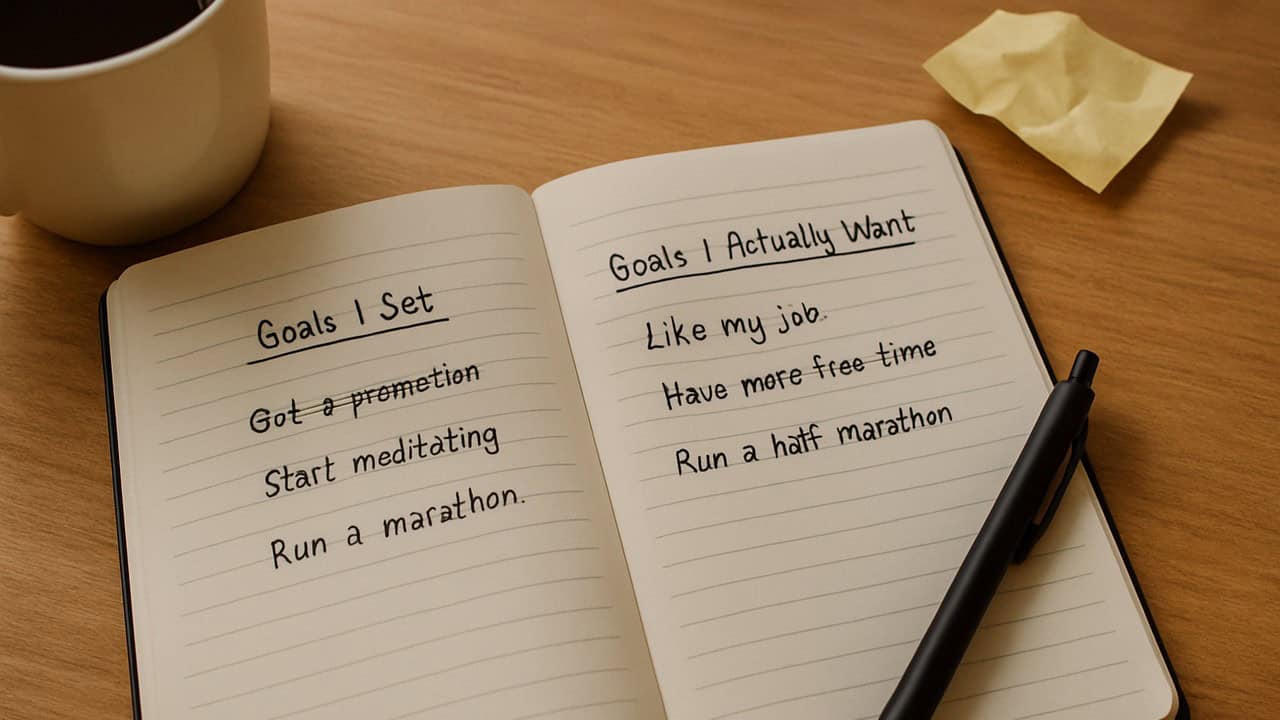
It’s easy to blame yourself. Lack of willpower, poor discipline, too distracted. But what if the real issue isn’t effort—it’s alignment?
Sometimes, we chase goals that look great on paper but don’t actually connect with what we want. Not really.
This isn’t a failure of ambition. It’s a signal. One that says: you might be working toward something you never truly chose.

We’re constantly surrounded by models of what success “should” look like—promotions, side hustles, fitness milestones, languages learned on Duolingo. So we adopt goals without asking the deeper question: Is this something I actually want—or just something I think I should want?
You tell yourself you want to get that next title at work—but do you, or does it just seem like the logical next step?
There’s a difference between pursuing something because it excites you and pursuing it because it fits a narrative. A “should” goal drains you. A “want” goal energizes you.
Seeing someone else crush a marathon, a business launch, or a wardrobe overhaul can stir up envy disguised as inspiration. So you make it your goal, even if it’s not yours to chase.
Sometimes we set goals just to feel like we’re steering the ship. But choosing any direction is not the same as choosing the right one.
When a goal lacks internal resonance, your mind doesn’t rally behind it. Instead, it resists—in ways that look like laziness but are actually signals.
No dopamine hit: Intrinsic goals trigger reward pathways. Forced goals don’t.
Subconscious pushback: Your brain protects you from change that feels threatening—success included.
Values conflict: If the goal feels at odds with who you are, procrastination becomes self-preservation.
Buried desires: The louder, external goals can drown out what you actually want but haven’t admitted.
You’re not just avoiding work. You’re avoiding a version of yourself that doesn’t fit.
Run these filters against the goals you’re dragging your feet on:

If you’ve been chasing goals that don’t land, here’s how to pivot without feeling like you’re giving up:
What matters to you at a foundational level—freedom, creativity, connection, mastery? Your goals should grow from there.
Want to lose weight? Why? To feel better? Why? To feel more confident at events? The real driver isn’t the number—it’s the feeling.
Instead of declaring a new identity, test it. A week of journaling. Three workout classes. A weekend project. Let experience guide you.
If the work itself doesn’t feel good—at least some of the time—it won’t last. Don’t just pick goals with appealing results. Pick ones with meaningful paths.
If a goal doesn’t serve you anymore, drop it. That’s not quitting. That’s evolving.
A goal connected to something bigger—a cause, a belief, a personal truth—becomes easier to stick with. Meaning beats willpower.
You don’t need more discipline. You need better alignment.
If you keep bailing on your own goals, it might not mean you’re flaky. It might mean you’re finally listening to the part of you that wants something else.
So try this: Drop the goal that drains you. Name the one that excites you—even if it’s quieter. Your effort will follow your energy.

The editorial team at FashionBeans is your trusted partner in redefining modern men’s style. Established in 2007, FashionBeans has evolved into a leading authority in men’s fashion, with millions of readers seeking practical advice, expert insights, and real-world inspiration for curating their wardrobe and lifestyle.
Our editorial team combines over 50 years of collective experience in fashion journalism, styling, and retail. Each editor brings specialized expertise—from luxury fashion and sustainable style to the latest grooming technology and fragrance science. With backgrounds ranging from GQ and Esquire to personal styling for celebrities, our team ensures every recommendation comes from a place of deep industry knowledge.
 02 July 2025
 FashionBeans Editors
We independently evaluate all recommended products and services. Any products or services put forward appear in no particular order. if you click on links we provide, we may receive compensation.
You set the goal. You make the plan. You even feel that burst of motivation—for a while. Then the resistance creeps in. You stall. You ghost your own progress. Eventually, you quit. Again.
It’s easy to blame yourself. Lack of willpower, poor discipline, too distracted. But what if the real issue isn’t effort—it’s alignment?
Sometimes, we chase goals that look great on paper but don’t actually connect with what we want. Not really.
This isn’t a failure of ambition. It’s a signal. One that says: you might be working toward something you never truly chose.
We’re constantly surrounded by models of what success “should” look like—promotions, side hustles, fitness milestones, languages learned on Duolingo. So we adopt goals without asking the deeper question: Is this something I actually want—or just something I think I should want?
You tell yourself you want to get that next title at work—but do you, or does it just seem like the logical next step?
There’s a difference between pursuing something because it excites you and pursuing it because it fits a narrative. A “should” goal drains you. A “want” goal energizes you.
Seeing someone else crush a marathon, a business launch, or a wardrobe overhaul can stir up envy disguised as inspiration. So you make it your goal, even if it’s not yours to chase.
Sometimes we set goals just to feel like we’re steering the ship. But choosing any direction is not the same as choosing the right one.
When a goal lacks internal resonance, your mind doesn’t rally behind it. Instead, it resists—in ways that look like laziness but are actually signals.
No dopamine hit: Intrinsic goals trigger reward pathways. Forced goals don’t.
Subconscious pushback: Your brain protects you from change that feels threatening—success included.
Values conflict: If the goal feels at odds with who you are, procrastination becomes self-preservation.
Buried desires: The louder, external goals can drown out what you actually want but haven’t admitted.
You’re not just avoiding work. You’re avoiding a version of yourself that doesn’t fit.
Run these filters against the goals you’re dragging your feet on:
If you’ve been chasing goals that don’t land, here’s how to pivot without feeling like you’re giving up:
What matters to you at a foundational level—freedom, creativity, connection, mastery? Your goals should grow from there.
Want to lose weight? Why? To feel better? Why? To feel more confident at events? The real driver isn’t the number—it’s the feeling.
Instead of declaring a new identity, test it. A week of journaling. Three workout classes. A weekend project. Let experience guide you.
If the work itself doesn’t feel good—at least some of the time—it won’t last. Don’t just pick goals with appealing results. Pick ones with meaningful paths.
If a goal doesn’t serve you anymore, drop it. That’s not quitting. That’s evolving.
A goal connected to something bigger—a cause, a belief, a personal truth—becomes easier to stick with. Meaning beats willpower.
You don’t need more discipline. You need better alignment.
If you keep bailing on your own goals, it might not mean you’re flaky. It might mean you’re finally listening to the part of you that wants something else.
So try this: Drop the goal that drains you. Name the one that excites you—even if it’s quieter. Your effort will follow your energy.
The editorial team at FashionBeans is your trusted partner in redefining modern men’s style. Established in 2007, FashionBeans has evolved into a leading authority in men’s fashion, with millions of readers seeking practical advice, expert insights, and real-world inspiration for curating their wardrobe and lifestyle.
Our editorial team combines over 50 years of collective experience in fashion journalism, styling, and retail. Each editor brings specialized expertise—from luxury fashion and sustainable style to the latest grooming technology and fragrance science. With backgrounds ranging from GQ and Esquire to personal styling for celebrities, our team ensures every recommendation comes from a place of deep industry knowledge.


Get the latest Men's Style Advice, Evergreen Guides, Shopping Tips, and Exclusive Deals From Today's Top Brands.
We respect your privacy. We won't spam you.
Get the latest Men's Style Advice, Evergreen Guides, Shopping Tips, and Exclusive Deals From Today's Top Brands.
We respect your privacy. We won't spam you.
